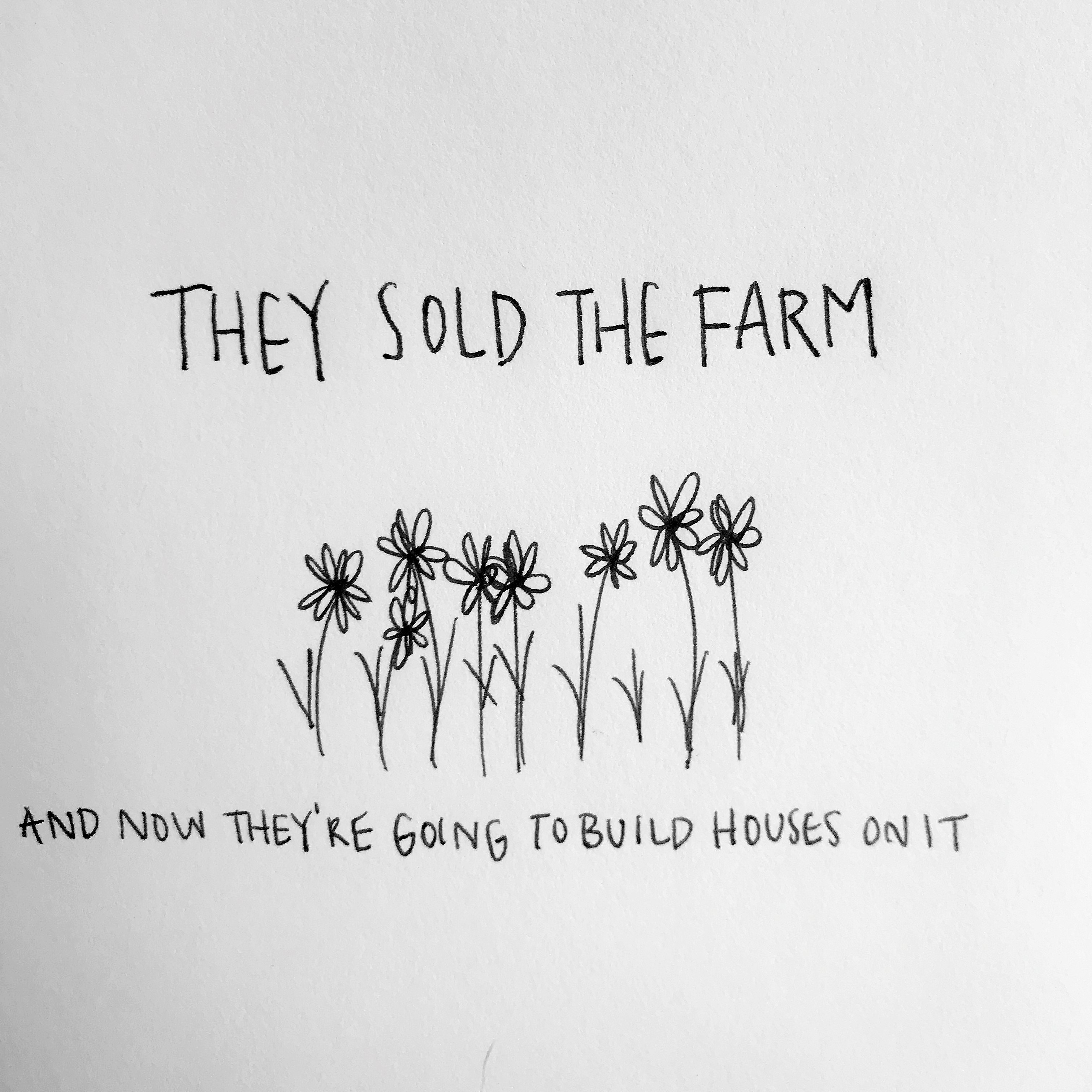
“They sold the farm,” Melissa said, “and now they’re going to build houses on it.”
Razor Love cooed over the car speakers as we drove through the curves and hills of Old Pond Road. The farm wasn’t extensive, about 8-10 acres, but what it lacked in size it made up for in gumption. There was nothing more farmland than this farmland. When painters and poets tumbled into nostalgic puddles of early American agriculture, they most likely pictured this farm. Horses grazed on hills, cows swatted at flies, and a tire swing hung from an ancient Oak tree. She slowed the Volvo down, and we stared at the white fence and the green grass that flickered in the sunlight. I realized I had never seen it until I knew it would no longer exist, which is true of most things.
“Maybe they’ll preserve the land,” I said, “Maybe it will be a state park.”
XXX
Every morning in second grade, Mrs. Pilkerton commanded Bus 550 to school. Her small, portable fan rustled the strands of yesterday’s perm, while her eyes seared into the rearview mirror. “Stop laughing,” she barked at the unruly seven-year-olds.
A child memorizes her daily map quickly, and I soon developed stories for every interesting landmark we passed along the way. There was a very small beige house on the right side of the road that I determined was big enough for just one bed and one lamp. A lonely man lived there, and he would stay up late, eating popcorn and watching Are You Being Served? reruns on PBS.
There was a car that sat in the front yard of a yellow house. Countless years of overgrowth and erosion had rendered it immovable, and only the top windows and roof remained visible. The rest, I figured, was hidden deep inside the Earth and I hypothesized that the soil would soon swallow it whole.
There was a long, crumbly set of stone stairs that led to a home of unidentified color. Large, unkempt willow trees blocked the view of the exterior, and their leaves would fall and collect on each wayward step. I looked forward to driving by this house every day and would crane my neck backward in attempts to steal, or even borrow, glances of the life inside.
But the fourth wall shatters loudly, and a child soon realizes that the man in the tiny house is just a utility shed, and the sinking car is just an old camper shell sitting idle in the grass. One day on the way to school, I noticed a long, thin line of smoke stretching into the pink sky. The curious house on the hill was ablaze, and as we drove closer, I could see the tractors and workers monitoring the scene. The fire devoured the crumbly steps and tore through the willow trees. It incinerated the green grass and chewed at the tops of the old hills. I stood up, my hands clinging to the vertical sliding windows. “Get in your seat,” Mrs. Pilkerton said.
The house on the hill is now a CVS where senior citizens can pick up their prescriptions and high school students can purchase condoms with their minimum wage camp counselor salary.
XXX
I know that they won’t preserve the land on Old Pond Road. The horses will be sold, the hills will be leveled out, and the wild, green grass will be replaced with sod. Large houses will line the asphalt paths, and they’ll have to paint each door a distinct color so the inhabitants will know how to tell them apart. Years from now, I’ll drive by Manor Lane or Autumn Pond or September Village. I’ll envision the farmland with the tire swing, and think to myself, “everything was better back then.” And then I’ll spit into the wind, lace my white New Balance sneakers, and drive to the mall to yell at the youths.

 Non Epiphany